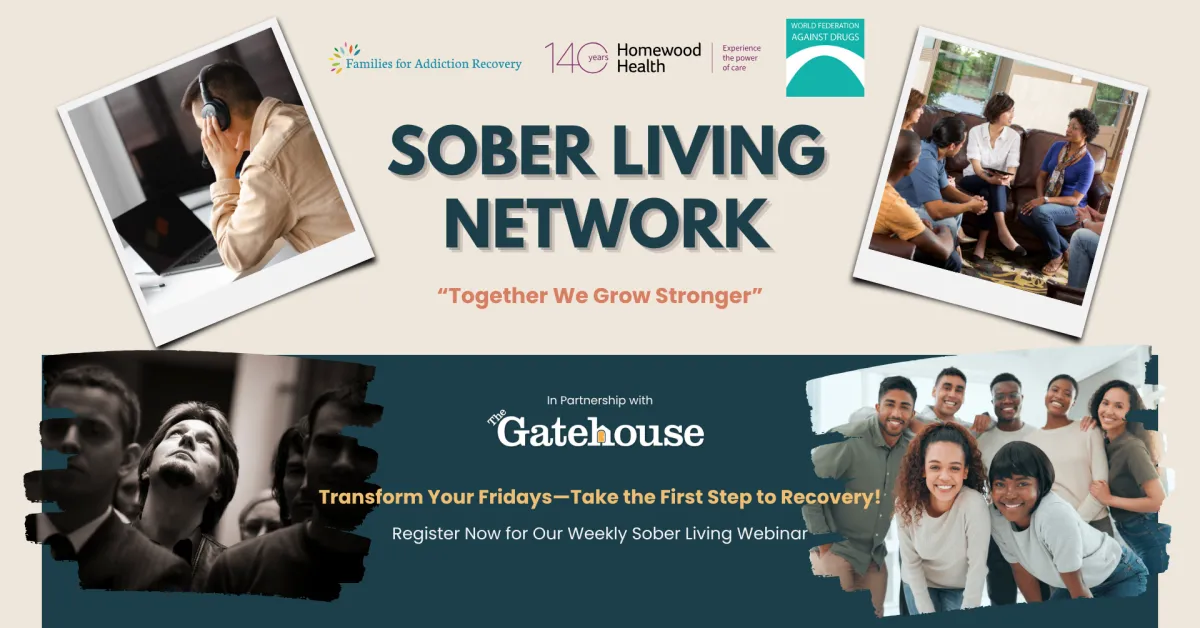
NYSLN Extended Event Summary: Chad Johnson's "Being Available, Showing Up, and Service in Recovery"
New York Sober Living Network | Tuesday, January 20, 2026 | 12:00 PM – 1:00 PM EST
A Recovery Session on Presence, Purpose, and the Transformative Power of Helping Others
📋 Complete Event Documentation
Part ① Event Overview & Context
Event Details:
🔸 Title: Being Available, Showing Up, and Service in Recovery
🔸 Date: Tuesday, January 20, 2026
🔸 Time: 12:00 PM – 1:00 PM EST
🔸 Format: Live Zoom | Recovery Education & Discussion
🔸 Speaker: Chad Johnson, Sober Coach, Podcast Host, Recovery Advocate
🔸 Host: Dr. Ken Markowitz, NYSLN
🔸 Attendance: 40+ participants (Toronto, New York, Chicago, International)
Historic Significance:
This was NYSLN's continuation of their Tuesday lunchtime series connecting mental health professionals with individuals in recovery and their families. Chad's session focused on the practical, lived experience of maintaining recovery while serving others—a crucial bridge between early recovery (where the focus is on self) and mature recovery (where the focus expands outward).
Community Context:
New York Sober Living Network operates as part of a global peer-led recovery community:
🌍 Headquarters: Toronto, Canada
🌍 Additional Chapters: New York (established); Chicago (launched); Mumbai, India; Enugu, Nigeria
🌍 Mission: Create judgment-free spaces where individuals at every stage of sobriety can find understanding, resources, and peer connection
🌍 Format: Free weekly Zoom sessions (Tuesdays 12-1 PM EST for NYSLN) + educational eBooks + companion workbooks + recovery resources
Part ② About Chad Johnson
Professional Background:
Chad Johnson is a Certified Sober Coach and recovery advocate with 11+ years of continuous sobriety. He operates across multiple platforms and organizations, each reflecting his commitment to breaking stigma and creating recovery-ready communities.
Credentials & Platforms:
🔹 Founder and Host of "Not All There Podcast" (peer-led recovery conversations)
🔹 Host of "Sober with Chad" (coaching and mentorship platform)
🔹 Founder of The Art of Recovery Foundation (advocating for addiction awareness and recovery)
🔹 Initiator and Host of SLN Chicago Chapter (building recovery community in the Midwest)
🔹 Certified Sober Coach (providing one-on-one and group coaching)
🔹 Professional recovery speaker and educator
Personal Journey:
Chad's credibility comes from lived experience, not theory:
💫 21 years of active addiction (alcohol and drugs) characterized by isolation and self-destruction
💫 Survivor of severe childhood abuse and multiple traumas (grew up in rural Oregon with an abusive father)
💫 Got sober and began recovery work, eventually achieving genuine sobriety around year 2-3
💫 Years 1-5: Marathon runner (literally running from his trauma); trained intensely, ran marathons, used running as a substitute for substance abuse
💫 Year 5: Body completely gave out; forced to stop running and face the accumulated trauma that surfaced
💫 Years 5-9: Prolonged nervous breakdown; had to face everything—all trauma, all shame, all pain; this period involved intensive therapy, peer support, and genuine emotional processing
💫 Year 9: Breakthrough in self-acceptance; realized he couldn't change the past, but he could accept who he was and build from there
💫 Years 9-11: Evolution into genuine recovery; began liking himself, becoming present for family, developing service work, helping others
💫 Present (11+ years sober): Married, father of two teenage sons (ages 13 and 15), actively coaching others, hosting podcasts, building community, still in therapy, still doing daily recovery practices
Why Chad's Approach Matters:
Chad bridges two critical worlds:
🌟 Traditional Recovery Models: He understands AA, NA, clinical therapy, evidence-based treatment, and the value of structure and community in recovery
🌟 Real-Life Complexity: He doesn't pretend recovery is linear or that you ever stop being a "recovering" person.
He still has struggles with his wiring, his intensity, his trauma responses. He's still doing the work after 11 years.
His unique value: He models what mature, sustainable recovery actually looks like—not perfect, but grounded, connected, purposeful, and committed to helping others find the same.
Part ③ Core Themes & Educational Content
Theme ① "Self-Acceptance is the Foundation" (Not Perfection)
The Problem:
Most people in recovery spend the first years in internal conflict. They've accepted intellectually that they're an alcoholic or addict, but they haven't accepted emotionally. Part of them is still fighting against reality, still believing they should be different, should be stronger, should have never gotten here.
This internal war is exhausting. It consumes mental and emotional energy that could be used for actual healing and growth.
Chad's Journey:
For years, Chad was sober but at war with himself. He was doing the external work (meetings, therapy, running marathons) but internally rejecting himself for what he was. Around year 9, something shifted.
"This is me. This is who I am. There's nothing I can do that's gonna change that. I can't fix it. I can't do anything to change the past. But I can accept it."
This moment—when acceptance shifted from intellectual to emotional—changed everything.
Why This Matters:
When you stop fighting against yourself, when you stop trying to be someone different, a huge relief emerges. No more arguing with reality. No more shame spirals. No more performing.
Chad describes it: "There was a huge relief in that. Like, oh, okay, this is me. I don't have to go around trying to figure out who I am. I don't have to listen to my own bullshit or bullshit others. This is the person that I am."
Workbook Integration:
For future workbook development, this theme would include:
📖 Daily acceptance practices (acknowledging reality without judgment)
📖 Journaling prompts around self-acceptance
📖 Distinguishing between "I can't change the past" and "I can change my response to it"
📖 Tracking the relief that comes from stopping the internal war
Theme ② "From Acceptance to Genuine Self-Esteem" (The Scaling Method)
The Problem:
Acceptance alone isn't enough. You can accept yourself and still hate yourself. You can accept that you're a recovering alcoholic and still feel worthless.
The next step is learning to genuinely like yourself. But most recovery programs leave you to figure this out on your own.
Chad's Solution:
Chad discovered what he calls the "scaling method"—starting ridiculously small and building from there.
"I decided that maybe it was time to start liking myself for who I was. And let's start with, like, an hour, okay? I can do that, and let's start with a day, and then a couple of days, and pretty soon, I was able to string together several months of liking myself, and my entire perspective on things changed."
This isn't positive thinking or affirmations. It's a neuroplasticity practice. By consistently choosing to like himself for small increments of time, Chad rewired his brain's relationship to himself.
The Cascade Effect:
When Chad began genuinely liking himself:
🌟 He became a better parent (more present, less reactive)
🌟 He became a better husband (more emotionally available)
🌟 He became a better friend (authentic instead of performing)
🌟 He stopped caring what people thought (freedom)
🌟 He became genuinely present for others
Why This Matters:
Self-esteem built on genuine self-acceptance is sustainable because it's not fragile. It's not based on external validation or achievements. It's based on knowing yourself and choosing to show up anyway.
Workbook Integration:
📖 Daily self-esteem building exercises (start with "I did one thing well today")
📖 Scaling practices (an hour of liking yourself, then a day, then a week)
📖 Tracking cascade effects (as your self-esteem improves, what changes in your relationships?)
📖 Practical exercises in meeting yourself with compassion
Theme ③ "Community is Non-Negotiable" (The Different Layers)
The Truth:
"You can't live a life of active recovery on your own. Doing it in shadows, secretly, without letting people know, defeats the entire purpose."
Why:
Chad's addiction was an "addiction of isolation." For 21 years, he couldn't face the world or himself. He needed to numb himself every day because the pain of existing was unbearable.
Recovery demands the opposite: radical connection, visibility, vulnerability, and community.
What Community Actually Provides:
When you're surrounded by people who understand you, who've lived similar experiences:
💚 The loneliness goes away (you're no longer isolated with your pain)
💚 You have hope (you see others making it work)
💚 You're seen for who you truly are (validation and acceptance)
💚 You realize you're not broken or alone
💚 You get perspective when problems feel enormous
💚 You get support when you're struggling
💚 You remember your "why" when you're losing motivation
The Different Layers:
Chad emphasizes that community exists at multiple levels:
🔵 Recovery-Specific Community: AA meetings, NA meetings, recovery groups, sponsorship relationships. People who speak the language and understand the struggle.
🔵 Like-Minded Community: Men's groups, peer coaching circles, recovery-focused gatherings. People doing similar work, often outside of 12-step structure.
🔵 Professional Community: Therapists, coaches, mentors. People trained to help you process and heal.
🔵 Broader Community: Family, friends, colleagues. People who care about you and support your recovery, even if they haven't experienced addiction.
🔵 Service Community: People you help and coach. This creates a feedback loop where giving strengthens your own recovery.
Why Multiple Layers Matter:
People who've lived through similar experiences offer irreplaceable camaraderie. You're seen, validated, understood.
But people with no frame of reference to addiction offer something equally valuable: they remind you how far you've come and reinforce your commitment never to return. They help you integrate back into mainstream society and prove to yourself that you can function and be present outside the recovery bubble.
Chad's Communities Include:
🔹 AA meetings and his AA crew
🔹 A men's group he started at his house
🔹 Recovery podcasts and online networks
🔹 Multiple therapists over the years
🔹 Family and friends who support his recovery
🔹 Mentees and coaching clients he serves
Workbook Integration:
📖 Mapping your community (identifying which layers you have and which you need)
📖 Community-building exercises (how to start a group, how to join one)
📖 Vulnerability practices (sharing with people in each layer)
📖 Tracking the impact of community on your recovery trajectory
Theme ④ "The Three Stages of Recovery" (Critical Distinctions)
The Language Problem:
Most people use "abstinence," "sobriety," and "recovery" interchangeably. This is a profound mistake because it conflates three very different states of being.
Abstinence: Just Stopping
Definition: Not using a substance or addictive behavior.
What It Includes:
🔹 Not drinking or using drugs
🔹 Not gambling, binge eating, compulsive sex, working obsessively
🔹 Physically not engaging in the behavior
What It Doesn't Include:
🔹 Internal transformation
🔹 Healing from trauma
🔹 Building healthy relationships
🔹 Developing self-worth
🔹 Creating meaning and purpose
🔹 Any emotional or spiritual component
The Reality: You can be abstinent and still be:
🔹 Angry and resentful
🔹 Depressed and hopeless
🔹 Isolated and lonely
🔹 White-knuckling through each day
🔹 Ready to relapse at any moment
🔹 Miserable
Sobriety: Sustained Abstinence + Awareness
Definition: Not using AND understanding why you don't use, while actively working on yourself.
What It Includes:
🔹 Not using substances
🔹 Understanding your patterns and triggers
🔹 Attending meetings or therapy
🔹 Working on yourself (journaling, meditation, etc.)
🔹 Being honest about your struggles
🔹 Showing up, even when it's hard
🔹 Having structure and accountability
What It Might Still Be Missing:
🔹 Deep healing from trauma
🔹 Full integration of lessons into daily life
🔹 Authentic connection with others
🔹 Genuine purpose and meaning
🔹 Joy and peace
The Reality: You can be sober and still be:
🔹 Going through the motions
🔹 Isolated and lonely
🔹 Avoiding the real deep work
🔹 White-knuckling through life
🔹 One failed support system away from relapse
🔹 Functional but not fulfilled
Recovery: The Full Transformation
Definition: Living a full, authentic life in alignment with your values, having healed from the wounds that drove your addiction.
What It Includes:
🔹 Abstinence from substances and harmful behaviors (obviously)
🔹 Genuine self-acceptance and self-esteem
🔹 Deep work on trauma and underlying issues (nervous breakdowns, if necessary)
🔹 Authentic relationships and genuine community
🔹 Purpose, meaning, and contribution to others
🔹 Helping others (service)
🔹 Joy, peace, and spiritual alignment
🔹 Living your values
🔹 Being genuinely present for yourself and others
🔹 Still growing and evolving
What It Looks Like:
🔹 You genuinely like yourself (flaws and all)
🔹 You're present with your family and friends (not just physically there)
🔹 You help people without expecting anything in return
🔹 You handle hard days without using
🔹 You sleep well knowing you lived well
🔹 You contribute to your community
🔹 You build others up
🔹 You remember your "why" every single day
🔹 You're still doing the work (therapy, practices, community)
🔹 You're still humble and learning
The Critical Insight:
Not everyone makes the journey from abstinence to sobriety to recovery. Many get stuck in sobriety—not using, but not truly living. They're stable but not transformed. And when one pillar of support fails (lost their sponsor, can't make meetings, lost their job, relationship ends), they relapse.
Recovery, true recovery, is more resilient because it's built on internal transformation, not external structure.
Workbook Integration:
📖 Self-assessment tool (which stage are you in?)
📖 Pathway to the next stage (what does it take to move from abstinence to sobriety, sobriety to recovery?)
📖 Identifying areas of your life where you're abstinent/sober/recovering
📖 Building resilience by moving toward recovery
Theme ⑤ "The Daily Ritual That Keeps You Grounded" (Neuroplasticity in Action)
The Practice:
Chad has a non-negotiable daily ritual. Every single morning, almost 12 years into sobriety, he does the same thing:
"I wake up each day, and I have to remind myself: Hey, Chad, you're a recovering alcoholic and drug addict. Don't fuck it up today."
It sounds harsh. It sounds negative. But it's neither.
Why This Works:
This is a neuroplasticity practice. By repeatedly activating the same intention every morning, Chad is:
① Bringing himself into the present moment. His mind isn't in yesterday's regrets or tomorrow's anxieties. He's here, now, making a choice.
② Activating his "why." It's not just "I'm sober," it's "I have something I'm protecting." Kids. Wife. Work. Community. Purpose.
③ Preventing relapse amnesia. Research shows that over time, people forget why they got sober. They start thinking "Maybe I wasn't that bad." Or "Maybe I can handle just one drink." By reminding himself every morning of what he is, Chad immunizes himself.
④ Reserving willpower for everything else. The biggest decision of the day is made first thing: "I'm not using today." This frees mental energy for parenting, working, helping others.
⑤ Accepting reality without fighting it. He's not saying "Pray I don't relapse." He's saying "This is who I am. And today I'm choosing not to act on it."
The Acceptance Built In:
What's beautiful about this ritual is that it's not based on shame or self-punishment. It's based on complete acceptance.
Chad is saying: "I'm deeply traumatized. I'm wired in ways that make recovery work necessary. I'm still that wounded kid from Oregon. None of that has changed. And I'm choosing, every day, to show up anyway."
This is maturity. This is humility. This is the difference between someone who's been sober 12 years and someone who's just managed not to drink for 12 years.
Workbook Integration:
📖 Creating your own daily ritual (what reminder keeps you grounded?)
📖 Neuroplasticity practices (understanding how repetition rewires your brain)
📖 Morning intention-setting exercises
📖 Tracking the effects of daily rituals over weeks and months
Theme ⑥ "Listening as a Revolutionary Act" (The Prerequisite for Service)
The Insight:
"One of the most important things you can do for someone is just be available to listen to what they have to say. You may not even need to share anything with them. Just listening to them is enough for them to get the help that they need."
Why This Is Revolutionary:
In a world of:
🔹 Constant distraction (everyone's on their phone)
🔹 Performative advice-giving ("Here's what you should do")
🔹 Problem-solving without understanding ("Why don't you just...")
🔹 Judgment and criticism ("That was stupid")
Genuine listening has become genuinely radical. People are starved for it.
The Prerequisite:
But Chad knows something crucial: you can't listen to others if you're not listening to yourself.
"If I'm stuck in my own head, dealing with my own crap, I'm not available to do that."
This is why the daily ritual matters so much. By taking time each morning to ground yourself, you clear the mental clutter that would otherwise prevent genuine presence.
It's the airplane oxygen mask principle: put your own mask on first.
What Genuine Listening Looks Like:
🔹 Putting your phone away (actual presence)
🔹 Making eye contact (showing you're engaged)
🔹 Letting them finish without interrupting
🔹 Asking follow-up questions (showing you care)
🔹 Not trying to fix them (letting them own their experience)
🔹 Not sharing your story unless they ask (keeping the focus on them)
🔹 Simply witnessing and reflecting back what you hear
🔹 Following up the next day
What It Creates:
🔹 Safety ("It's safe for me to be vulnerable with this person")
🔹 Trust ("This person genuinely cares")
🔹 Feeling seen ("Someone understands me")
🔹 Validation ("My experience matters")
🔹 Reduced isolation ("I'm not alone")
🔹 Hope ("If someone can listen like this, maybe I can get help")
Workbook Integration:
📖 Active listening exercises
📖 Reflective listening practices
📖 Distinguishing between listening and advising
📖 Tracking the impact of genuine listening on your relationships
Theme ⑦ "The Power of Small Gestures" (Compound Effect of Kindness)
The Hierarchy of Service:
Service doesn't exist at one level. It exists on a spectrum:
Level ① Minor Gestures
🔹 Smile at someone on the street
🔹 Say hello
🔹 Hold a door
🔹 Make eye contact
🔹 Give a compliment
Level ② Personal Connection
🔹 Listen without judgment
🔹 Ask meaningful questions
🔹 Remember details
🔹 Follow up
🔹 Show genuine care
Level ③ Direct Support
🔹 Help someone solve a problem
🔹 Provide emotional support
🔹 Volunteer expertise
🔹 Spend time with someone
🔹 Be physically present
Level ④ Major Intervention
🔹 Help someone get to treatment
🔹 Mentor someone in recovery
🔹 Give significant time/resources
🔹 Change someone's trajectory
🔹 Potentially save someone's life
The Key Insight:
You don't need to be at Level ④ to matter. Even Level ① gestures compound into massive impact when you think about how many people's days you're touching.
The Personal Story: Making Your Bed
During the session, participant Leo Petrilli shared: "Making my bed, every morning."
This is a perfect example. Making your bed isn't a gesture to someone else. It's a gesture to yourself. But it's exactly the kind of small, consistent action that builds momentum.
When you make your bed:
✓ You start your day with an accomplishment
✓ You create order in your environment
✓ You're being responsible to yourself
✓ You're practicing self-care
✓ You're building self-esteem
✓ Before you even leave your room, you've done one good thing
The Gratitude Practice
Participant Barb Lang noted: "I think there is a lot of meaning in those smaller gratitudes. It doesn't always have to be the big stuff."
This is crucial for recovery. In early recovery, you're not ready for grand service. But you ARE ready for:
🔹 Making your bed
🔹 Brushing your teeth
🔹 Taking a shower
🔹 Going for a walk
🔹 Saying thank you
🔹 Smiling at someone
These small acts:
① Build momentum
② Create self-esteem
③ Prove to yourself you're capable
④ Set up a foundation for bigger actions
The Scaling Principle:
Chad's approach to self-esteem and service is built on scaling:
Day 1: I brushed my teeth and made my bed
Day 2: I brushed my teeth, made my bed, and went for a walk
Day 3: I brushed my teeth, made my bed, went for a walk, and said hello to my neighbor
Week 2: I've done all of the above plus I volunteered 2 hours
Month 1: I've built a routine, volunteered regularly, and helped someone through a crisis
The power? Each small win stacks on top of the previous ones. Before you know it, you're living a life of meaning and service.
Workbook Integration:
📖 Small gesture log (tracking Level ① and Level ② acts daily)
📖 Gratitude practice (noticing small things to be grateful for)
📖 Scaling exercises (how to build momentum from one small action to the next)
📖 Tracking the compound effect over weeks and months
Theme ⑧ "Vulnerability: The Strength Everyone Overlooks" (Gateway to Service)
The Core Question:
During the session, Carby asked: "Is 'Vulnerability' a factor in lasting Recovery? And is this another way to put it, the working mechanism in respect to 'Giving Back' or 'Service'?"
Chad's answer was unambiguous: "Yes."
And participant Leo Petrilli captured the emotional truth: "Tears are power."
What Vulnerability Actually Means:
Vulnerability isn't weakness. In recovery, vulnerability means:
🔓 Being willing to tell the truth
🔓 Admitting you don't have it all figured out
🔓 Sharing your struggles, not just your successes
🔓 Asking for help
🔓 Being emotionally present
🔓 Letting others see the real you
Vulnerability = Strength in Recovery:
Chad models this throughout his life:
🔹 He shares his crazy stories about his addiction
🔹 He talks about his trauma
🔹 He admits when he's struggling
🔹 He participates in therapy
🔹 He shares his failures alongside his successes
🔹 He asks for help from his wife, friends, and community
Why This Matters:
When people see you being vulnerable and still showing up, it gives them permission to do the same. Vulnerability creates connection. Connection creates recovery.
In a culture that often teaches—especially men—to hide emotions, recovery requires the opposite. When you can:
🔹 Cry
🔹 Express emotion
🔹 Show fear
🔹 Admit confusion
🔹 Ask for help
You're demonstrating the strength it takes to live an authentic life.
Vulnerability in Service:
When you serve others from a place of vulnerability, the service transforms:
💚 It's not superior or patronizing (you're not better than them)
💚 It's peer-to-peer, person-to-person
💚 It says: "I've been where you are. Here's how I'm moving forward"
💚 It gives them hope that change is possible
💚 It allows them to see the real you, not a performance
💚 It creates connection, not dependency
Workbook Integration:
📖 Vulnerability practices (safe places to practice being vulnerable)
📖 Distinguishing between appropriate and inappropriate vulnerability
📖 Tracking how vulnerability deepens your relationships
📖 Practicing service from a place of vulnerability
Part ④ Practical Frameworks & Tools
The Daily Scaling Method for Self-Esteem
Chad's most practical contribution is his daily scaling method for building self-esteem:
Start Ridiculously Small
The first goals in recovery aren't "Get a job" or "Rebuild your marriage." They're:
🔹 Tie your shoes
🔹 Brush your teeth
🔹 Get dressed
🔹 Do laundry
🔹 Fold the laundry
🔹 Go for a walk
Why? Each action is evidence that you're not lazy, not broken, not incapable. You're capable of doing one thing. And then another. And then another.
Document Your Wins
Chad's approach:
"I can look back, like, oh, well, you know what? I walked my dog today. And I picked up the dog poop. I was an active person in public today. I was out in society, and I was doing something. I was being polite and responsible. And that's something that you can build on for the day."
The practice:
🔹 Keep track of what you accomplished
🔹 Celebrate small wins
🔹 Notice your presence and activity in the world
🔹 Build a positive narrative about yourself
Connect Positive Actions to Positive Feelings
Chad shares: "There's also, you know, I spoke to another person about their recovery a day, and that made me feel good. So that's something that I like feeling, so I'm gonna do that again."
The pattern:
① Do a positive action
② Notice how it feels
③ Identify the positive feeling
④ Repeat the action to experience the feeling again
⑤ Build a routine around actions that feel good
Meet People Where They Are
As a coach, Chad emphasizes that recovery isn't one-size-fits-all:
Early Recovery (First 30 Days):
🔹 Focus: Not using, showing up to meetings, basic self-care
🔹 Goal: Survive and stay connected
First Year:
🔹 Focus: Building routine, processing trauma, developing self-esteem
🔹 Goal: Get stable and start healing
Year 2-5:
🔹 Focus: Deep trauma work, relationship repair, building life
🔹 Goal: Create a sustainable recovery lifestyle
Year 5+:
🔹 Focus: Mastery, giving back, evolving spiritually
🔹 Goal: Live with purpose and serve others
Use Journaling and Expression
Chad uses journaling extensively:
"I've got notebooks everywhere. I'll be flipping through work ideas, and then I'm like, oh god, here's 5 pages of whatever I was going through that day. So I'll go back and read it. That's another nice way to reflect back on what you were feeling, what you were writing."
The benefits:
🔹 Gets thoughts out of your head
🔹 Allows reflection and pattern recognition
🔹 Provides evidence of growth over time
🔹 Engages a different part of your brain
🔹 Creates accountability
Relatable Connection (Especially with Kids)
Chad's example with his 13-year-old son:
"I just try to encourage him with little things, or say 'Oh, that's cool, good job.' Like, not being critical. Unless it needs to be, right? And meeting him, accepting him. Okay, today was just whatever. He doesn't like school. Alright, well, let's not make a big deal about it, okay? Let's find something positive that we can talk about or relatable."
This applies to self-esteem:
🔹 Find one thing you did well
🔹 Don't be overly critical
🔹 Find something positive to focus on
🔹 Meet yourself with acceptance and encouragement
Part ⑤ The Roadmap to Service
Option ① Existing Organizations
Local Services:
🔹 Food banks and soup kitchens
🔹 Donation and charity centers
🔹 Community centers
🔹 Religious organizations
🔹 Non-profits
Recovery-Specific:
🔹 12-step meetings (sponsorship, literature table, setup/cleanup)
🔹 Recovery houses
🔹 Treatment centers
🔹 Recovery coaching organizations
🔹 Peer support groups
Getting Started:
🔹 Search your area for volunteer opportunities
🔹 Call and ask: "I'm in recovery and looking to give back. How can I help?"
🔹 Start small—even 2 hours per month makes a difference
Option ② Community Projects
Community-Based Service:
🔹 Food drives (sorting cans, organizing donations)
🔹 Park cleanups
🔹 Beach cleanups
🔹 Community gardens
🔹 School volunteering
🔹 Youth sports coaching
Getting Started:
🔹 Go to events happening in your community
🔹 Volunteer with your kids (teaches them about service)
🔹 Notice what issues matter to you and find organizations working on them
Option ③ Start Your Own
Chad's Story:
"When I got sober, my kids were very young. I needed to be present for bedtime and my wife. So I started my own group meeting at my house. It's pretty easy to do, because there are a lot of like-minded people out there."
Ideas for Starting Your Own:
🔹 AA/NA home meeting
🔹 Book club focused on recovery
🔹 Men's or women's group
🔹 Peer support circle
🔹 Online community
🔹 Mentorship circle
🔹 Service project group
The Power of Starting Small:
🔹 Invite a few people over
🔹 Create a safe, welcoming space
🔹 Be consistent
🔹 Let it grow organically
🔹 Lead by example
Option ④ Direct Asking
Chad's Most Powerful Suggestion:
"If you just go around and ask, 'Hey, I am looking to be of service to other people. Is there anything that you guys need help with that I might be able to help you with?' And it'll stop people dead in their tracks. They'll think, and you'll get an answer. Either they can help you, where they work can help you, or they know someone that needs help and they can get you pointed in that direction."
Why This Works:
🔹 Most people are waiting for someone to ask
🔹 Your genuine desire to help is rare and valued
🔹 It opens doors you didn't know existed
🔹 It often leads to unexpected connections and opportunities
The Benefit of Service (No Matter Which Path)
No matter which path you choose, service does something that nothing else can:
🌟 Reinforces your sobriety (reminds you why you got sober)
🌟 Builds self-esteem (you're doing good)
🌟 Connects you to others
🌟 Creates meaning and purpose
🌟 Breaks the cycle of self-centeredness
🌟 Helps you sleep better knowing you helped someone
🌟 Keeps you humble and grounded
🌟 Models recovery for others
In a very real sense, service is the antidote to addiction. Addiction is about taking, using, consuming. Recovery is about giving, serving, contributing.
Part ⑥ Q&A Highlights & Community Engagement
Q① Clarifying Sobriety, Abstinence, and Recovery
Carby's Question: "Can you help me clarify the difference between Sobriety/Abstinence and Recovery?"
Chad's Response: Chad distinguished between the three stages clearly, emphasizing that not everyone moves through all three. Many people remain in sobriety indefinitely—not using, but not truly living. Recovery is the full transformation where you're genuinely liking yourself, present with others, and serving your community.
💡 Key Insight: Understanding these distinctions changes how you approach your recovery and helps you identify where you might be stuck.
Q② Vulnerability as the Mechanism of Lasting Change
Carby's Question: "Is 'Vulnerability' a factor in lasting Recovery? And is this another way to put it, the working mechanism in respect to 'Giving Back' or 'Service'?"
Chad's Response: Chad affirmed that vulnerability is absolutely central to lasting recovery and to the mechanism of service. When you serve from a place of genuine vulnerability, it creates peer-to-peer connection rather than a hierarchy of "helper" and "helped."
Leo Petrilli's Contribution: "Tears are power."
💡 Key Insight: Vulnerability is strength. When you allow yourself to feel, to admit struggle, to ask for help, you unlock the capacity for genuine connection and authentic service.
Q③ How to Practice Vulnerability
Carby's Follow-up: "Follow up to that question.. How can I 'practice' Vulnerability"
Chad's Response: While not fully elaborated in the transcript, Chad's overall approach suggests starting small—sharing something real with one trusted person, being honest about struggles, asking for help, expressing emotion.
💡 Key Insight: Vulnerability can be practiced incrementally, just like self-esteem. You don't need to share everything with everyone. Start with safe people in safe spaces.
Q④ Getting Started with Service
Carby's Question: "If I want to pursue the path of Service.. how do I get started?"
Chad's Response: Chad provided four concrete pathways (existing organizations, community projects, starting your own, direct asking), emphasizing that the best path is the one you actually take. Meeting people where they are is key—in early recovery, even volunteering 2 hours per month is meaningful.
💡 Key Insight: Service doesn't require perfection or grand gestures. It requires consistency and genuine desire to help.
Q⑤ Addressing Negative Influences
Carby's Question: "In respect to my previous life/habits, and especially my circle of (negative) influence (ie. 'friends', coworkers).. Do you recommend to distance myself to keep out of range of trouble or triggering environments?"
Follow-up Question: "When will i know it is the 'right' time to 'test the waters' and re-enter those environments and reconnect with those 'friends'..."
Chad's Response: (While not fully captured, Chad's approach suggests waiting until your recovery is solid enough to handle triggers, being strategic about re-entry, and maintaining boundaries with people/places that actively undermine your sobriety.)
💡 Key Insight: Recovery doesn't mean permanent isolation, but it does require strategic boundary management in early stages. Re-entry happens when your recovery is resilient, not when you think you're "fixed."
Q⑥ The Role of Spirituality and Belief
Carby's Question: "And in addition to community / service.. does my beliefs influence my recovery? For example, does God (religion aside) play a role?"
Chad's Response: (While not fully captured in transcript, Chad's overall approach suggests non-dogmatic spirituality. Whether you call it God, the universe, purpose, or community, having something larger than yourself to orient toward helps recovery significantly.)
💡 Key Insight: Spirituality matters, but it doesn't require a specific theology. What matters is having meaning and purpose beyond your own ego.
Q⑦ Community Recognition of Small Victories
Participant Leo Petrilli: "Making my bed, every morning."
Participant Barb Lang: "I think there is a lot of meaning in those smaller gratitudes, it doesn't always have to be the big stuff."
Ken Markowitz Response: "I agree! It's the small things that we often take for granted and should always be grateful for."
💡 Key Insight: The community affirmed that small actions, done consistently, are the foundation of recovery. Making your bed daily is as valid and important as major service work.
Q⑧ Session Closing
Participant Damien Reilly: "I have to jump. Thanks everyone! Thanks Chad! Thanks Ken!"
Multiple Participants: "Thanks so much Chad, and Ken!" and "Thanks all"
Part ⑦ Integration & Next Steps
For Participants:
① If you attended the live session:
🔸 Download the full eBook for deeper learning
🔸 Implement the daily ritual (your own version of "Don't fuck it up today")
🔸 Practice one Level ① gesture daily (smile, hello, thank you)
🔸 Identify which layers of community you have and which you need
🔸 Choose one service pathway to explore this month
🔸 Start journaling (small wins, feelings, reflections)
② If you're new to this work:
🔸 Read through the eBook first to understand the framework
🔸 Start with the daily ritual (adapt it to your own belief system)
🔸 Begin with Tool #1: Making your bed and doing basic self-care
🔸 Document your small wins
🔸 Build from there
③ If you want to deepen the practice:
🔸 Consider one-on-one coaching with Chad or another trained coach
🔸 Join a recovery community (AA, SMART, Lymbic, etc.)
🔸 Combine this work with therapy or counseling
🔸 Start a home group or meet-up in your area
🔸 Join NYSLN Tuesday sessions weekly (free, judgment-free community)
For Mental Health Professionals:
The NYSLN platform is a vital resource for:
🔹 Connecting with clients in recovery
🔹 Understanding peer-led support models
🔹 Referring clients to free community resources
🔹 Learning about cutting-edge recovery practices
🔹 Building collaborative relationships with recovery communities
Part ⑧ The Bigger Picture
Why This Matters Now
Recovery work has traditionally focused on "stopping the behavior" (abstinence) and cognitive processing (therapy). This helps millions. But many people still feel stuck, still struggle with meaning and purpose, still can't regulate their nervous systems without substances.
Chad's work—and NYSLN's platform—represents a paradigm shift: Healing requires meeting the person where they are across all dimensions simultaneously.
This means:
💫 Traditional therapy (still essential)
💫 Plus 12-Step or peer programs (still valuable)
💫 Plus practical self-esteem building (small gestures, daily rituals)
💫 Plus community across multiple layers (recovery-specific and broader)
💫 Plus service and meaning-making (gives purpose to recovery)
The Result:
People don't just stop using substances—they reclaim their lives. They:
🌟 Develop genuine self-acceptance and self-esteem
🌟 Build authentic community across multiple layers
🌟 Discover meaning and purpose through service
🌟 Regulate their nervous systems (can be present without numbing)
🌟 Sleep well knowing they lived well
🌟 Know they're not alone
🌟 Have hope that change is possible
Part ⑨ Accessibility & Inclusivity
NYSLN's commitment to accessibility:
Financial:
💰 Free weekly Zoom sessions (Tuesdays 12-1 PM EST)
💰 Free eBooks and educational materials
💰 Free community access
💰 Sliding scale for direct coaching
Accessibility for Different Backgrounds:
🌈 No religious requirement
🌈 Non-dogmatic spirituality
🌈 No special preparation needed
🌈 Judgment-free (cameras on or off—your choice)
🌈 Welcomes skeptics and believers alike
For Healthcare Providers:
🏥 Mental health professionals welcome
🏥 NYSLN serves as a vital platform to connect with the community you serve
🏥 Integration with clinical recovery models (not replacement)
Part ⑩ Contact & Resources
Speaker:
Chad Johnson, Sober Coach & Recovery Advocate
🔗 Website: https://www.soberchad.com/
🔗 Email: (available through website)
🔗 Podcasts: "Not All There" & "Sober with Chad"
🔗 Services: Coaching (sliding scale), Speaking, Advocacy
🔗 Location: Chicago, IL (distance sessions available globally)
New York Sober Living Network:
🔗 Website: https://soberlivingnetwork.org
🔗 Linktr: https://linktr.ee/soberlivingnetwork
🔗 Email: [email protected]
🔗 Weekly: Tuesday 12:00 PM – 1:00 PM EST
Related Resources:
🔗 Art of Recovery Foundation: https://www.artofrecoveryfoundation.org/
🔗 Lymbic: https://www.lymbic.org/
🔗 Not All There Podcast: https://notalltherepod.com/
Crisis Resources:
🆘 National Helpline: 1-800-662-HELP (4357) – Free, confidential, 24/7
🆘 Crisis Text Line: Text HOME to 741741
🆘 AA: https://www.aa.org/
🆘 SMART Recovery: https://www.smartrecovery.org/
🆘 Local mental health clinic or doctor
Part ⑪ The Larger Vision
What Chad's Work Represents
Chad Johnson isn't unique in being sober for 11+ years. But he's exceptional in how openly he shares his journey—not just the victories, but the nervous breakdown in year 5, the ongoing struggles with his trauma wiring, the daily commitment he still makes.
He's not selling a fantasy of "fixed recovery." He's modeling realistic, sustainable recovery: work, commitment, community, service, and genuine presence.
The Paradigm Shift
From "How do I stop using?" to "How do I build a life worth living?"
From "One day at a time" (survival mode) to "One day at a time with purpose" (thriving mode)
From "I need help" (vulnerability as need) to "I can help others" (vulnerability as strength)
Part ⑫ Final Words
Chad's Message to the Community:
(While not directly quoted, Chad's consistent message throughout is:)
"Show up. Be available. Start small. Be honest about who you are. Connect with people. Help others. That's the path. Not the only path. But a path that works."
Ken Markowitz's Framing:
"Recovery isn't about perfection. It's about showing up, staying connected, and living with gratitude one day at a time."
✨ Conclusion
The January 20, 2026 NYSLN session with Chad Johnson was a masterclass in practical recovery wisdom. Participants left with:
✨ Understanding: Why service is the mechanism of lasting recovery
✨ Frameworks: The three stages of recovery and how to move between them
✨ Practices: Daily rituals, scaling methods, small gesture frameworks
✨ Community: Connection to NYSLN and the broader SLN network
✨ Hope: Proof that transformation is possible, one day at a time
✨ Purpose: Clear pathways to meaningful service
By the end of the session, it was clear: recovery isn't something you achieve and then stop working on. It's a way of living—present, connected, purposeful, and dedicated to helping others find their own way.
Building Connection. Empowering Lives. Restoring Hope.
New York Sober Living Network
🔗 https://soberlivingnetwork.org
📧 [email protected]
👥 https://www.meetup.com/toronto-sober-living-network
Sober Living Network – Global Community
🔗 https://linktr.ee/soberlivingnetwork
📧 Connect through website
🔗 Registration: https://SoberLivingNetwork.org
Event Documentation Date: January 20, 2026
Materials Created: eBook (Full Educational Resource) + Event Summary (Quick Overview) + Extended Event Summary (Comprehensive Documentation)
Access: All materials available free to NYSLN community members and registered participants
🔗 https://linktr.ee/soberlivingnetwork
📧 [email protected]
👥 Meetup: https://www.meetup.com/toronto-sober-living-network